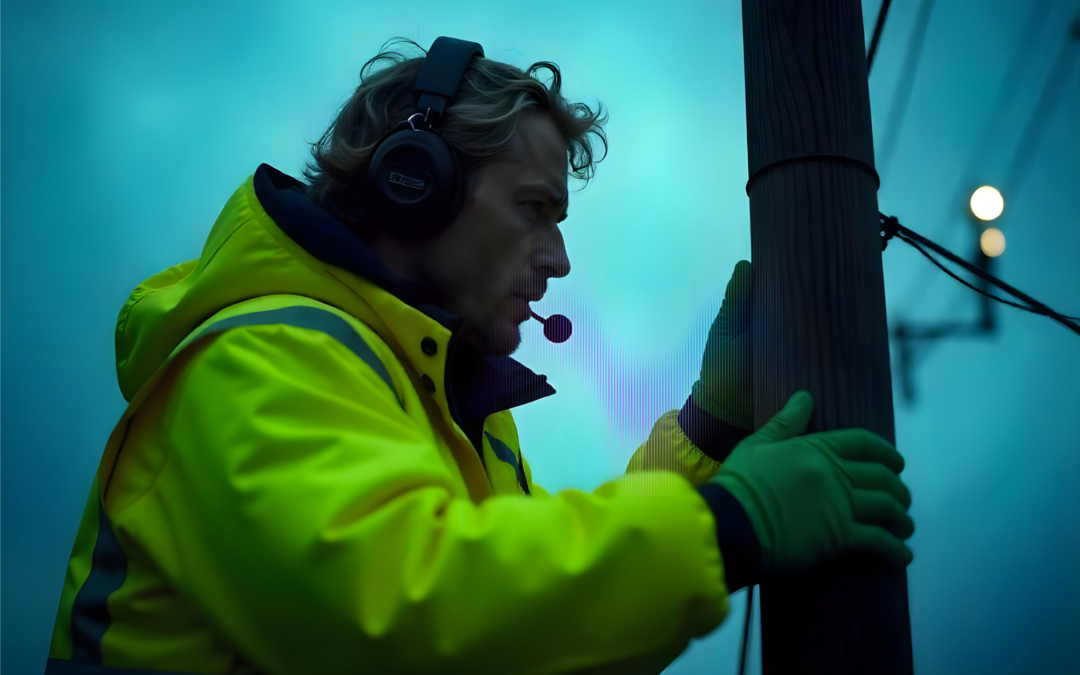
"Enquêtes de région – Grand Est" | "L'IA et moi"
Interview with Christophe Couvreur, CEO of Vivoka
Vivoka was featured in a France 3 segment filmed at its headquarters in Metz.
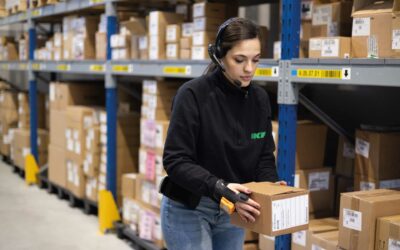
Aired as part of "Enquêtes de région – Grand Est – L'IA et moi", the segment highlights how Voice AI can support logistics operations through more natural, hands-free interaction. It also explores real-world operational challenges such as accent diversity, efficiency, and worker safety.
In the segment, Christophe Couvreur, CEO of Vivoka, explains how Voice AI adapts to real working conditions while opening a broader discussion on evolving job roles and the transformation of the industry.
Full transcript below.
Full Transcript
Follow the complete dialogue with timestamps
00:00 – 00:22
Picking Demonstration
Operator (voice assistant user)
Start order.
AI (voice assistant)
Shelf 1, bin 2. Location
Operator
24. Confirmation number
AI
Two items.
Operator
2.
AI
Shelf 1, bin 4.
Operator
12.
AI
Three items.
Operator
2.
AI
Insufficient quantity. Replenishment triggered
00:22 – 00:40
Introduction
Journalist
We are in Metz, at Vivoka's headquarters, one of the French leaders in voice recognition. Christophe Couvreur, one of the tools I have just tested is something you offer particularly for logistics platforms, and you even train the AI to recognize different foreign accents. What's the reason behind that?
00:41 – 01:08
Handling Foreign Accents
Christophe Couvreur (CEO of Vivoka)
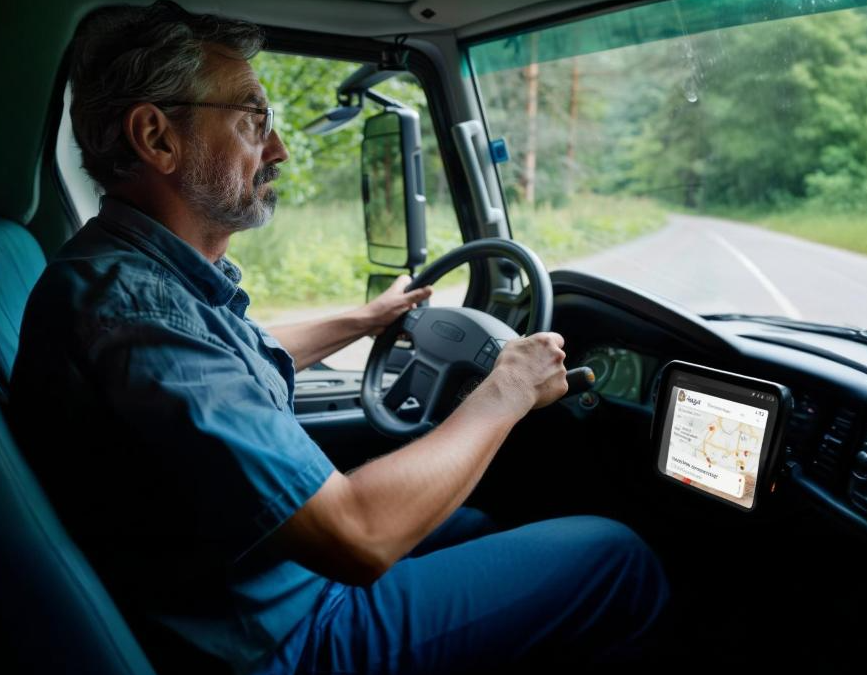
Voice technology has been used in logistics for many years, but until recently, one of the limitations of these technologies was that many workers had foreign accents and were therefore not properly recognized by the AI. As a result, many workers, often from immigrant backgrounds or newly arrived in the country may not yet fully master French, or the language used on the logistics platform. That can make it difficult for the AI to recognize them properly.
01:08 – 01:21
Continuous Learning
Journalist
So the AI learns to recognize these different accents?
Christophe Couvreur
Exactly. We pre-train the AI on a range of foreign accents, using AI itself to support that process, which then enables it to better understand people with different accents.
01:21 – 01:44
Human.AI Collaboration
Journalist
We can see that the Voice AI is setting the pace. To what extent is it taking over? Ultimately, is the human worker just there to obey?
Christophe Couvreur
That is already partly the case on many logistics platforms. The order comes in, you receive the list of items to pick on a tablet or a mobile phone, you go and collect them, and then you scan them.
01:44 – 02:07
Improving Work Efficiency
Journalist
So basically, there is no longer any thinking involved?
Christophe Couvreur
That is already the case in many of these roles. In fact, switching to voice AI, makes it possible to have a more natural interaction with the system. And therefore to enrich that interaction. Meanwhile, In more traditional models, where you simply have an app with a screen, you are forced to follow very closely what is being displayed. Voice changes that.
Journalist
We can clearly see the benefit: time savings.
02:08 – 02:35
Safety Benefits
Journalist
Another benefit, in the material handling industry, is also safety.
Christophe Couvreur
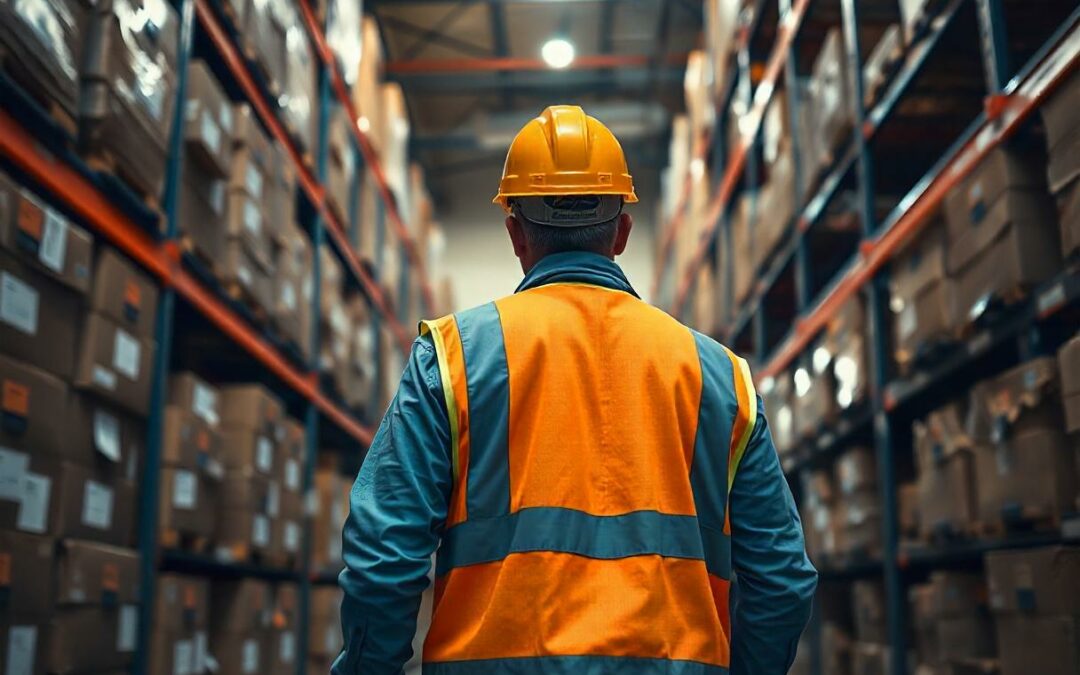
Exactly. When you do not need to handle a device — a tablet, a phone, or a computer attached to your wrist — you can remain fully focused on the task at hand. You are more likely to check the system for information because doing so does not interrupt your activity. So this improves not only the quality of work, but also safety, particularly because there is no longer any need to remove your gloves in order to use a tablet, for example.
02:36 – 03:02
The Future of Work
Journalist
Once again, we can see the positive side, but how far can this go? Should we be concerned about the disruption it may cause in the workplace?
Christophe Couvreur
In the very long term, what we have seen since the Industrial Revolution is the replacement of certain so-called less qualified roles by mechanized systems, then automated systems, and now systems transformed by AI. That necessarily implies a transformation of the world of work.
03:03 – 03:20
Conclusion
Journalist
So that means we need to anticipate it?
Christophe Couvreur
We need to anticipate it through training, by developing alternatives. Two centuries ago, you could show up with your two hands, be given a shovel, and start working. Today, you need to be able to operate construction machinery.
Journalist
And now, we are at the dawn of a new revolution.
Christophe Couvreur
Exactly!
About This Interview
- Interviewee: Christophe Couvreur, CEO of Vivoka
- Location: Vivoka headquarters, Metz, France
- Topic: The use of voice artificial intelligence in logistics platforms, the recognition of foreign accents, and the impact of AI on the future of work.
- Program: Enquêtes de région – Grand Est
- Episode: L'IA et moi
Topics Covered
Editorial note: This transcript comes from the excerpt broadcast on Enquêtes de région – Grand Est – L'IA et moi. It has been reviewed and lightly edited for easier online reading, while preserving the meaning and intent of the remarks made on air.